






Vent Genie installs dryer vent systems for new construction, appliance relocations, and full system replacements throughout Leominster and Central Massachusetts. Every installation uses code compliant rigid metal duct, correct termination, and a route designed for long-term airflow performance. No shortcuts that fail within two years.
Craig Hubbard’s 25 years in building science shape how every installation gets planned. The vent route, the materials, and the exterior termination all get specified before work starts. An installation done correctly from the beginning runs safely for years without problems.
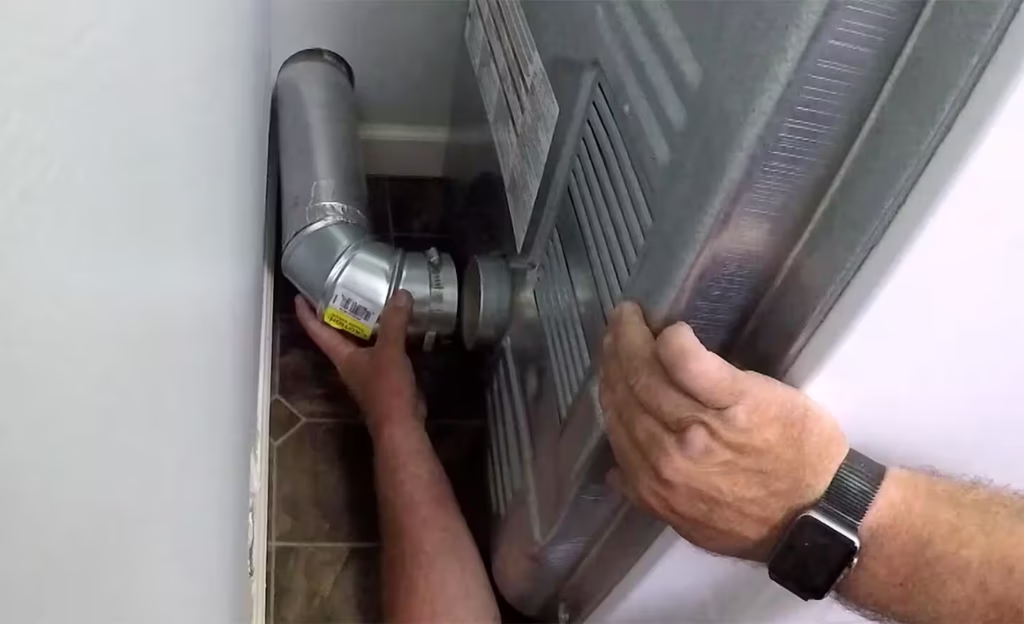
Every installation uses rigid metal duct or approved flexible metal. No plastic. No foil hose. Every material meets current Massachusetts building and fire code requirements from day one.
We plan the duct route before cutting anything. Shortest path, fewest bends, correct termination point. The route determines long-term airflow and fire safety, not just drying performance.
The exterior cap gets installed with a pest-resistant, code compliant cover that opens fully under airflow. Grated caps trap lint and fail code. Vent Genie installs the right cap every time.
After every installation, we run the dryer and verify airflow meets performance standards. You get confirmation that the system works correctly before we leave the job.
A new dryer vent installation is not always about a new home. These are the situations that require a full installation rather than a repair or cleaning visit.
Each situation calls for a planned installation, not a patch over an old system.
The International Residential Code and Massachusetts building standards set specific requirements for dryer vent installations. Maximum duct length, bend allowances, material type, and exterior termination all have defined standards. Most improper installations fail on one of these four points.
Duct length is the most commonly exceeded limit. Every 90 degree bend reduces the effective duct length allowance. A long run with multiple bends can push a system past its safe limit, even if the material is correct. Vent Genie calculates the full route before installation starts, so the finished system stays within code on every measurement.
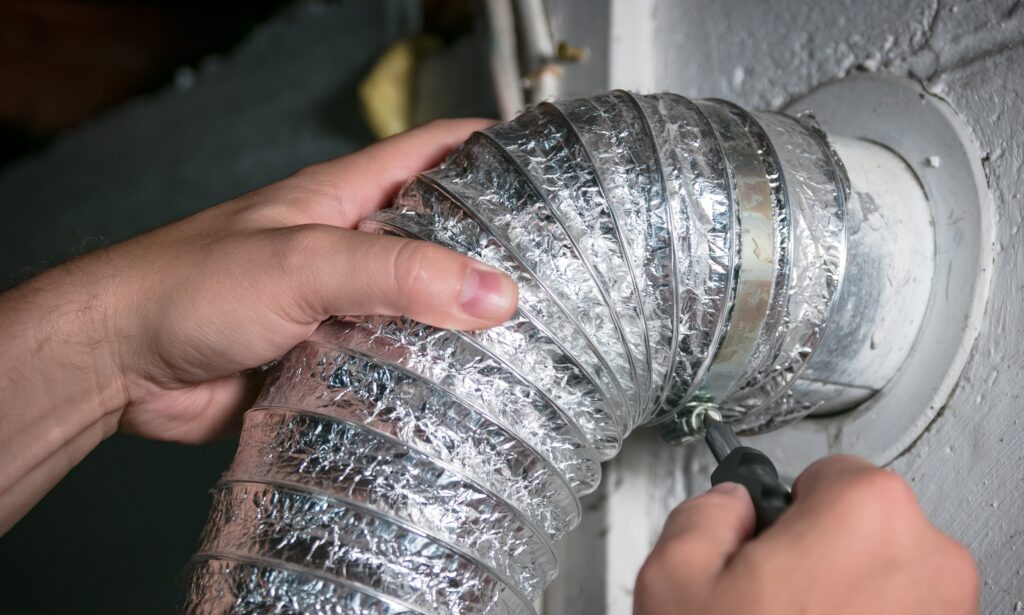
The installation starts with a site assessment. We identify the dryer location, measure the route to the exterior, count required bends, and determine the correct termination point. No cuts get made until the full route is mapped and confirmed with you.
Materials go in after the route is approved. Rigid metal duct for straight sections. Approved flexible metal for the connection at the dryer. A code compliant exterior cap with a proper flapper. Every joint gets sealed correctly. The dryer runs at the end of the visit and airflow gets verified before we consider the job complete.
Vent Genie installs dryer vent systems for every property type across Leominster and Central Massachusetts. New construction homes that need a system built from scratch. Renovations are moving the laundry room to a new location. Older properties are replacing original non-compliant installations that were never done correctly. Commercial facilities adding or upgrading dryer capacity. The installation standard stays consistent across every job type. Code-compliant materials, planned routing, verified airflow, documented work.
New builds need a dryer vent system installed before the walls close. Vent Genie works with builders and homeowners across Central Massachusetts during the construction phase to route, install, and terminate dryer vent systems correctly from the start. Rigid metal duct, correct bend count, proper exterior termination. Built right before the walls go up, so there is nothing to fix after.
Moving a laundry room to a new location means the existing vent route no longer works. Vent Genie plans the new route for renovated laundry spaces throughout Leominster and Central Massachusetts. We measure the path, identify the correct exterior exit point, install the full duct run in the new location, and verify airflow before the renovation wraps. The new room works correctly from day one.
Moving a dryer to a different room, floor, or corner of the same space changes the vent requirements. The old route does not follow the appliance. Vent Genie installs new duct runs for dryer relocations throughout Central Massachusetts. We plan the new route around your space constraints, use code-compliant materials throughout, and leave the relocated dryer connected to a properly installed and tested vent system.
Some existing vent systems cannot be brought up to code with repairs alone. Incorrect original routing, plastic material throughout, or duct length violations that require a full reroute all call for complete replacement. Vent Genie removes the existing non-compliant system and installs a replacement that meets current Massachusetts building and fire code standards. The original problem gets resolved permanently rather than patched temporarily.
Adding dryer capacity to a laundromat, hotel, or care facility means installing a vent system that handles sustained daily commercial use. Residential installation standards do not apply. Commercial dryer vent installations require a larger duct diameter, shorter runs where possible, and more frequent access points for maintenance. Vent Genie installs commercial dryer vent systems throughout Central Massachusetts, built to the load and frequency that commercial operations demand.
An improperly installed dryer vent fails in one of two ways. Performance degrades immediately, or the system holds for a year or two before the damage becomes visible. Either way, the root cause is the same. Wrong materials, a route with too many bends, a duct run that exceeds safe length limits, or an exterior cap that restricts airflow rather than allowing it.
The consequences build over time. Lint accumulates faster in an oversized-bend system than in a correctly routed one. A grated exterior cap traps lint at the termination point. A plastic hose section that was installed below a correct rigid metal run becomes the weakest link in the whole system. By the time homeowners in Central Massachusetts notice the problem, the incorrect installation has been creating risk since the day the dryer was first turned on.
Massachusetts residential building code follows the International Residential Code for dryer vent installations. The maximum equivalent duct length for a standard dryer is 35 feet from the connection at the appliance to the exterior termination. Every 90-degree bend reduces that allowance by 5 feet. Every 45-degree bend reduces it by 2.5 feet. A run with three 90-degree bends has an effective maximum of 20 feet of straight duct.
These numbers matter practically in Central Massachusetts homes where laundry rooms sit on upper floors or in the center of the house, far from an exterior wall. Long routes require careful planning. Some layouts require a booster fan to maintain safe airflow through a run that cannot be shortened. Vent Genie calculates every route before installation and identifies upfront when a booster fan is the right call rather than discovering it after the system underperforms. You know the full installation plan before any work starts.

Every installation gets routed and measured before the first cut. You approve the plan before work begins. No surprises mid-job.
Hubbard's 25 years in building science mean installations account for how the vent system interacts with the structure around it, not just the appliance.
Every installation ends with the dryer running and airflow confirmed. The system gets tested before we leave your property. Not assumed to be working.
Vent Genie is based in Leominster. We know Central Massachusetts homes and building layouts. No franchise pricing. No out of area crew unfamiliar with local construction.
Homeowners planning a renovation, appliance relocation, or new build often have questions about what a dryer vent installation involves. These are the questions Vent Genie hears most often across Leominster and Central Massachusetts.
Installation cost depends on the route length, number of bends required, wall penetrations needed, and the exterior termination point. A straightforward installation in a laundry room near an exterior wall costs less than a routed system running through multiple floors to a roof exit. Vent Genie assesses the route before quoting. Pricing gets explained before any work starts.
No. A clothes dryer must vent to the exterior of the building. Venting into an attic, crawl space, wall cavity, or interior room is a fire and moisture hazard and a code violation. Ventless heat pump dryers are an exception because they do not exhaust hot air. A standard electric or gas dryer requires a dedicated exterior vent installation.
A standard residential installation in a straightforward location takes two to four hours. Complex routes involving attic access, multiple floors, or exterior wall penetrations through finished surfaces take longer. Vent Genie gives a realistic time estimate after the site assessment, so you can plan the visit into your day without guessing.
Yes. Vent Genie coordinates with homeowners and contractors during renovation projects throughout Central Massachusetts. The best time to install or reroute a dryer vent is during the framing or pre-drywall phase, when routing through walls and ceilings is straightforward. We work within the renovation timeline to get the vent system in before the walls close.
A dryer vent is a dedicated 4-inch diameter exhaust duct designed to handle the volume of hot, moist air and lint a clothes dryer produces. Bathroom exhaust fan vents are smaller diameter and not built for lint. The two systems should never share the same duct run. Vent Genie installs dryer vents as standalone systems with their own dedicated exterior termination.
Yes, but the route requires careful planning. Interior laundry rooms often need longer duct runs to reach an exterior wall or roof exit. Vent Genie calculates the equivalent duct length, accounts for every required bend, and determines if the planned route stays within code limits. When the route pushes past safe length, we discuss booster fan options before installation begins.
The dryer vent duct itself uses the same material and installation standard for both gas and electric dryers. The difference is that a gas dryer installation also requires a licensed plumber or gas fitter for the gas line connection. Vent Genie handles the dryer vent installation. The gas line connection is a separate trade.
A booster fan is an inline device installed inside the duct run to maintain adequate airflow through long or complex vent routes. It is needed when the total equivalent duct length exceeds the safe limit for the dryer’s exhaust output. Vent Genie identifies during the route assessment when a booster fan is the right solution and installs it as part of the overall system.
A correctly installed dryer vent with code-compliant materials, proper routing, and an unobstructed exterior cap should be cleaned annually for most households. Pet owners and families running heavy daily laundry loads benefit from cleaning every six months. Vent Genie can set up a maintenance schedule after installation so the new system stays clear and performing correctly over time.
Yes. Vent Genie installs and replaces dryer vent systems with roof terminations throughout Central Massachusetts. Roof exits require planning for the exterior cap selection, duct material that handles the vertical run, and access for future cleaning. We coordinate with property managers and building owners where required and install roof-exit systems that are both code-compliant and accessible for maintenance.
Vent Genie serves homeowners and businesses throughout Leominster and Central Massachusetts with dependable full service dryer vent cleaning, air duct cleaning, dryer vent repair, and dryer vent installation. Our team is committed to fast scheduling, clear communication, and quality results you can count on.
As a locally focused dryer vent cleaning company, we understand how important it is to keep your home safe and your dryer running efficiently. That is why we show up prepared, work thoroughly, and leave every job done right. Below are some of the areas we serve.